Skip to content

Choosing the right custom product packaging bags can shape how customers judge your product before opening it. The bag must protect contents, support branding, and fit real handling conditions. A soft pouch may look elegant on a display shelf, yet fail when stacked in a delivery carton. Small details matter, including seal strength, material thickness, zipper quality, print accuracy, and storage space.
Packaging specialist Lisa McTigue Pierce has expressed a practical idea often used in packaging strategy: “Packaging is the product’s first impression.” That impression should feel intentional, not excessive. Strong packaging begins with the product itself. Is it oily, fragile, powdered, heavy, or sensitive to moisture? These answers influence barrier materials, closure styles, dimensions, and testing requirements. A supplier’s sample may look excellent, but performance under vibration, heat, and repeated handling deserves closer attention.
The following ten tips examine the decisions behind effective custom product packaging bags. They cover material selection, visual design, sustainability claims, production consistency, and customer convenience. They also address details that are easy to overlook, such as empty headspace, opening force, color variation, and minimum order quantities. Not every attractive option is practical. Sometimes, a simpler bag performs better and costs less. That is worth questioning. A reliable choice should balance protection, appearance, usability, and responsible production. It should also match the product’s market, shipping route, and expected shelf life. Packaging cannot solve every product problem. It can, however, prevent avoidable ones.
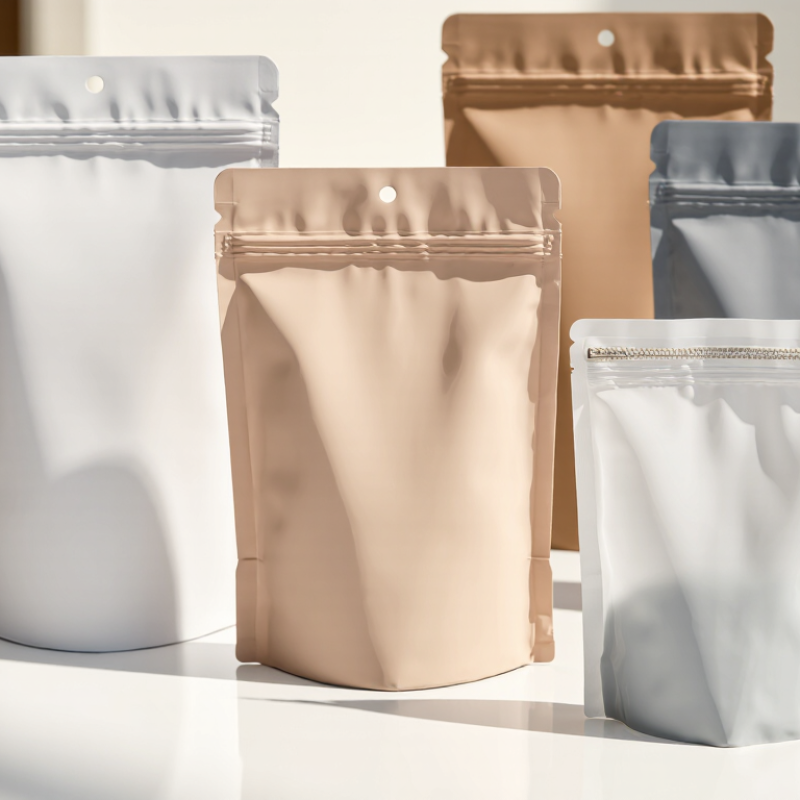
A custom packaging bag should begin with the product, not a color palette. Define its size, weight, shape, surface, and handling risks. A powder needs controlled sealing and dust resistance. A delicate item may need cushioning or a stronger material structure. Measure it twice. Do not guess. Note whether the product is oily, sharp-edged, moisture-sensitive, or affected by light. These details influence film structure, thickness, opening style, and seal strength.
Then define the intended audience and purchasing environment. A premium gift item may need a clean matte finish and precise printing. A household product might require grip, resealing, and easy storage. Observe how people open similar bags. Do they tear one beside a counter, or carry it inside a backpack? These moments reveal practical requirements. I once treated appearance as the main priority. The bag looked attractive but was awkward to open. That mistake taught me to test real use, not only a sample on a screen.
Write the packaging requirements before requesting quotations. Include dimensions, tolerances, material performance, closure type, handle strength, print needs, order quantity, and delivery schedule. Request material data and seal-test results. For products touching food or skin, require suitable safety documentation for the target market. Test prototypes for drops, abrasion, moisture exposure, and repeated opening. Some requirements will conflict. A thinner bag may reduce material use but lose strength. Choose based on measured performance, not assumptions. Recheck the final specification before production. Small omissions become expensive surprises.
| Tip | Decision Dimension | Relevant Data or Requirement | Recommended Packaging Direction | Practical Check |
|---|---|---|---|---|
| 1 | Define the product category | Food, cosmetics, apparel, powders, liquids, and hardware have different barrier, hygiene, and durability needs. | Select the bag structure according to the product’s moisture, oxygen, light, odor, and abrasion sensitivity. | List the product’s physical form, weight, shelf-life target, and storage conditions before requesting a quotation. |
| 2 | Identify the target audience | Consumer expectations may prioritize convenience, premium appearance, portability, accessibility, or low environmental impact. | Match the opening method, visual finish, handle design, and information hierarchy to the intended user. | Test the prototype with representative users and record opening time, carrying comfort, and readability. |
| 3 | Calculate the required capacity | Bag capacity depends on product density, fill weight, settling behavior, headspace, and sealing allowance. | Use internal dimensions that accommodate the actual filled volume without excessive empty space. | Fill trial bags at minimum, target, and maximum weights; check seal area and product clearance. |
| 4 | Choose the material structure | Common structures include polyethylene, polypropylene, polyester, paper laminates, aluminum foil laminates, and mono-material films. | Balance barrier performance, sealability, stiffness, transparency, recyclability, and cost instead of selecting material by appearance alone. | Request the full layer structure, thickness, intended use, and technical data sheet. |
| 5 | Set barrier requirements | Moisture-sensitive and oxygen-sensitive products require lower water-vapor and oxygen transmission rates; light-sensitive products may require opacity. | Specify target WVTR, OTR, light protection, and odor resistance based on the product’s stability requirements. | Ask for test conditions and units, because barrier results are meaningful only when the testing method is stated. |
| 6 | Select the closure and opening system | Zippers support resealing; tear notches support quick opening; spouts support controlled dispensing; heat seals provide tamper evidence when properly designed. | Choose the closure according to reuse frequency, product flow, tamper evidence, and filling equipment. | Perform repeated open-and-close tests and verify leak resistance after transport simulation. |
| 7 | Define size and ergonomics | Important dimensions include finished width, finished height, bottom gusset, seal width, handle position, and filled center of gravity. | Design the bag for stable shelf presentation, comfortable carrying, and efficient case packing. | Measure filled bags for tipping, bulging, handle deformation, and compatibility with cartons or display shelves. |
| 8 | Plan printing and labeling | Artwork should reserve space for product identity, net quantity, instructions, warnings, batch information, and legally required declarations. | Use a clear information hierarchy and confirm the printable area, color process, finish, and barcode quiet zone. | Review a physical proof under retail lighting and scan the barcode after printing. |
| 9 | Evaluate sustainability requirements | Sustainability depends on material composition, package weight, recycled content, local collection systems, and end-of-life instructions. | Compare lightweighting, recyclable mono-material options, recycled content, and reusable formats without compromising product protection. | Request composition details, recycled-content documentation, and disposal guidance applicable to the target market. |
| 10 | Confirm compliance, testing, and production needs | Relevant checks may include food-contact suitability, migration testing, seal strength, drop testing, compression testing, and transport conditioning. | Create a written specification covering materials, tolerances, artwork, inspection criteria, packing, and delivery requirements. | Approve a production sample and define acceptance limits before placing the full order. |
Note: Final material selection and compliance testing should be based on the product, destination market, filling process, and applicable local regulations.